
Terminology first
A 3D textile search term is not yet a product specification
International buyers use terms such as 3D woven cement blanket, 3D textile GCCM and spacer-fabric cementitious composite when they are looking for a particular textile architecture or a way to investigate one. Those search terms are commercially useful, but they are not interchangeable technical definitions. A 3D woven construction, a spacer textile, a conventional woven facing and a needle-punched route may have different layer arrangements, handling behavior and validation needs.
This page does not present a generic cement blanket line as already verified for every 3D textile structure. It turns the buyer's target material into a feasibility brief: document the actual textile sample and layer sequence, define the dry-material route, test handling through the selected process, then agree a product-specific quality plan before the line scope is fixed.
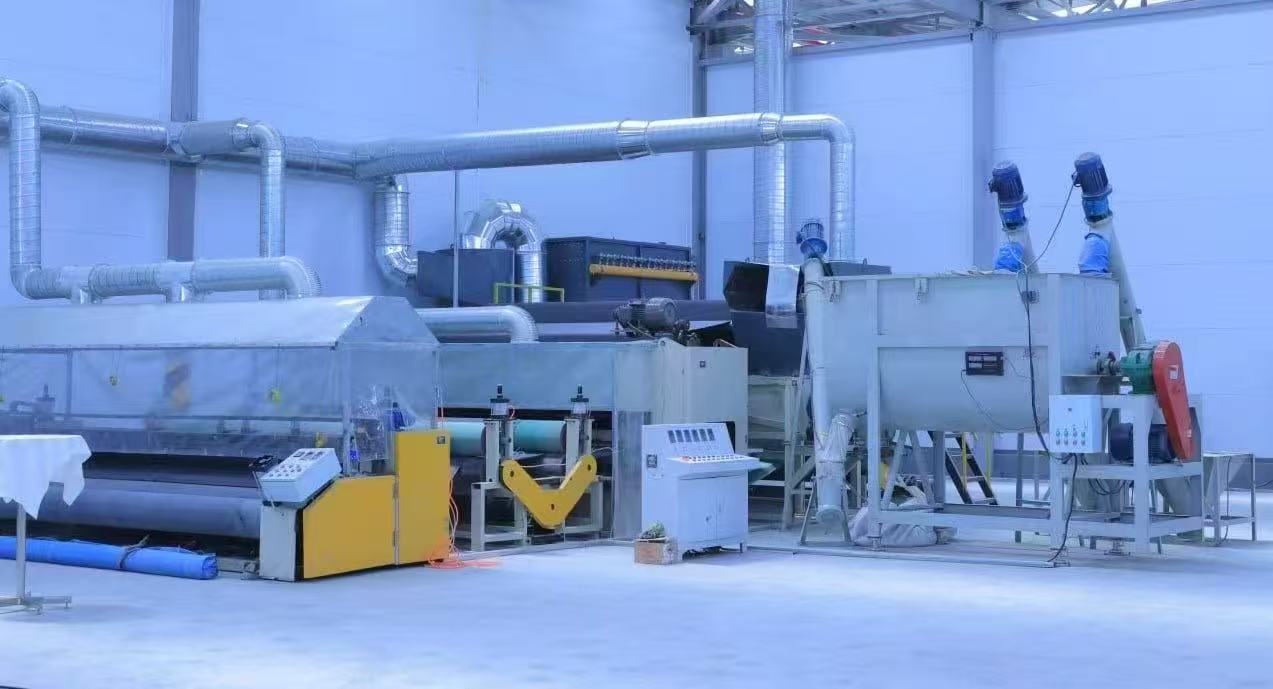
Real process footage
Roll-to-roll processing evidence
This supplied short video records a moving roll material at a roller/process section. It is visual factory evidence only. The video itself does not establish a fabric's 3D architecture, formulation, production rate or finished-material performance.
Equipment review
The questions that determine a viable route
Textile sample and construction
Provide a physical sample, supplier data sheet, layer sequence, thickness/recovery behavior, any backing or film and the intended roll format. The term 3D alone is not enough to select web guiding or consolidation equipment.
Web handling and tension
Review unwind geometry, guiding, contact surfaces, tension zones and edge control with the actual textile. A trial should check tracking, deformation and passage through the proposed material path.
Dry-material introduction
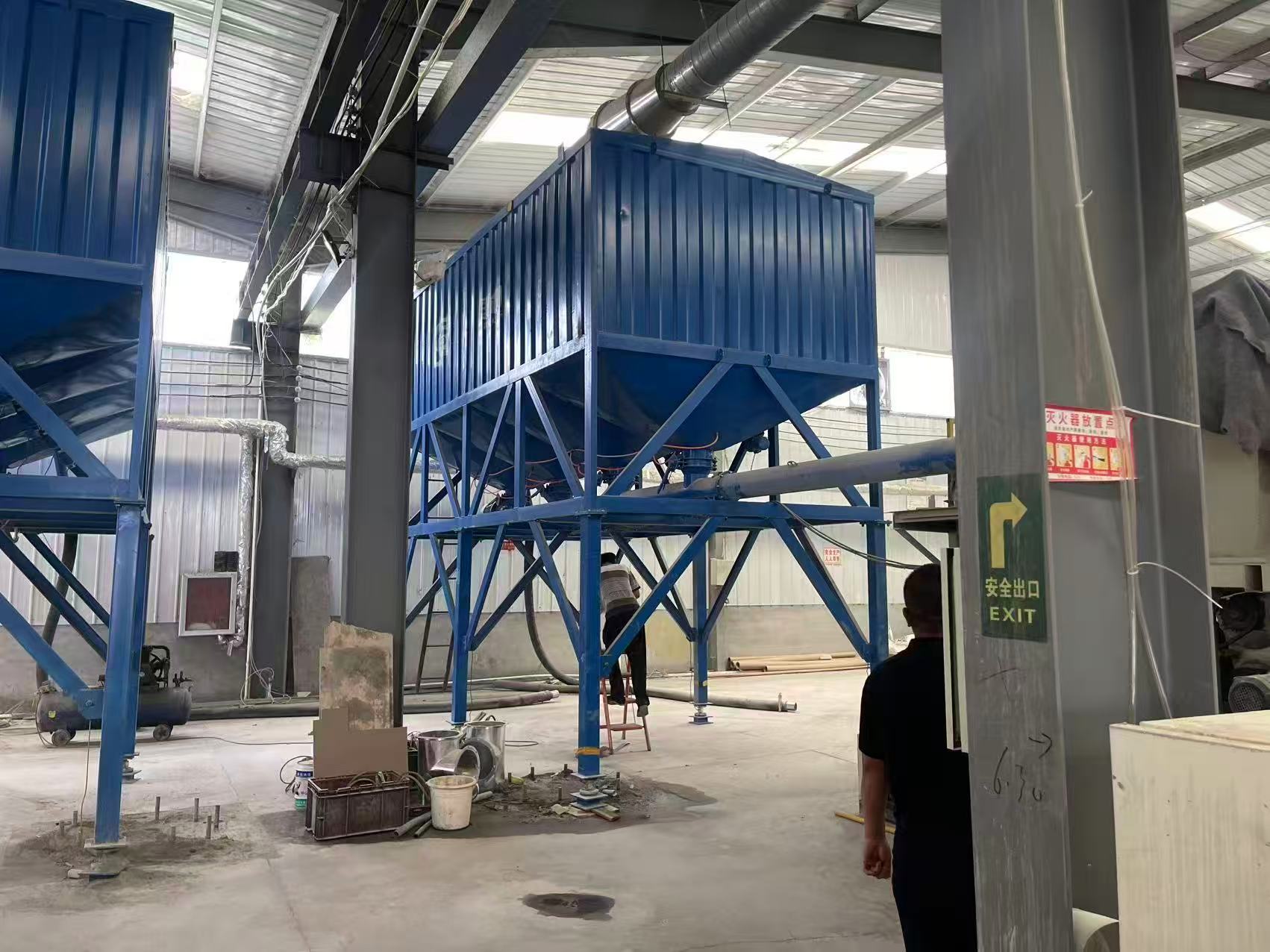
Define the dry cementitious material system, storage condition, moisture sensitivity, containment and the interface between delivery and textile. The proposal should identify the feeding and dust-management scope.
Composite formation route
Confirm how documented layers are assembled, supported and stabilized. Do not assume a needle-punched, coating or lamination route applies until the target construction has been reviewed.
Sample and quality plan
Agree specimen preparation, test methods, inspection points and acceptance criteria for the intended product and market. Equipment imagery does not replace finished-product evaluation.
Factory-side inputs
Share workshop layout, utilities, material movement, storage, maintenance access and operator plan. These inputs define the line interfaces as much as the material does.
Submitted-sample test record
Record 2025W12239FY
The record identifies a 12 mm Concrete Canvas / cement blanket sample. It is a commissioned testing record for the submitted sample only; it is not a universal product certificate, declaration of conformity or evidence that every textile route has the same result.
| Test item | Reported method | Reported conditions | Reported result |
|---|---|---|---|
| Thickness | GB/T 13761.1-2022 | (20 ± 2) °C; relative humidity (65 ± 4)% | 12.33 mm |
| Mass per unit area | GB/T 13762-2009 | (20 ± 2) °C; relative humidity (65 ± 4)% | 15 kg/m² |
| Flexural strength | GB/T 7019-2024, clause 5.7 | (23 ± 2) °C; relative humidity (50 ± 5)%; square specimen; loading time 10–30 s | 9.8 MPa |
| Impact resistance | GB/T 7019-2024, clause 5.9 | (23 ± 2) °C; relative humidity (50 ± 5)%; drop-ball method; 110 cm impact height | No cracks |
| Water impermeability | GB/T 7019-2024, clause 5.4 | (23 ± 2) °C; relative humidity >50%; 20 mm water head; 24 h test duration | No moisture marks or water droplets |
Read the record scope, full conditions and source-PDF context →
Field context, not a case claim
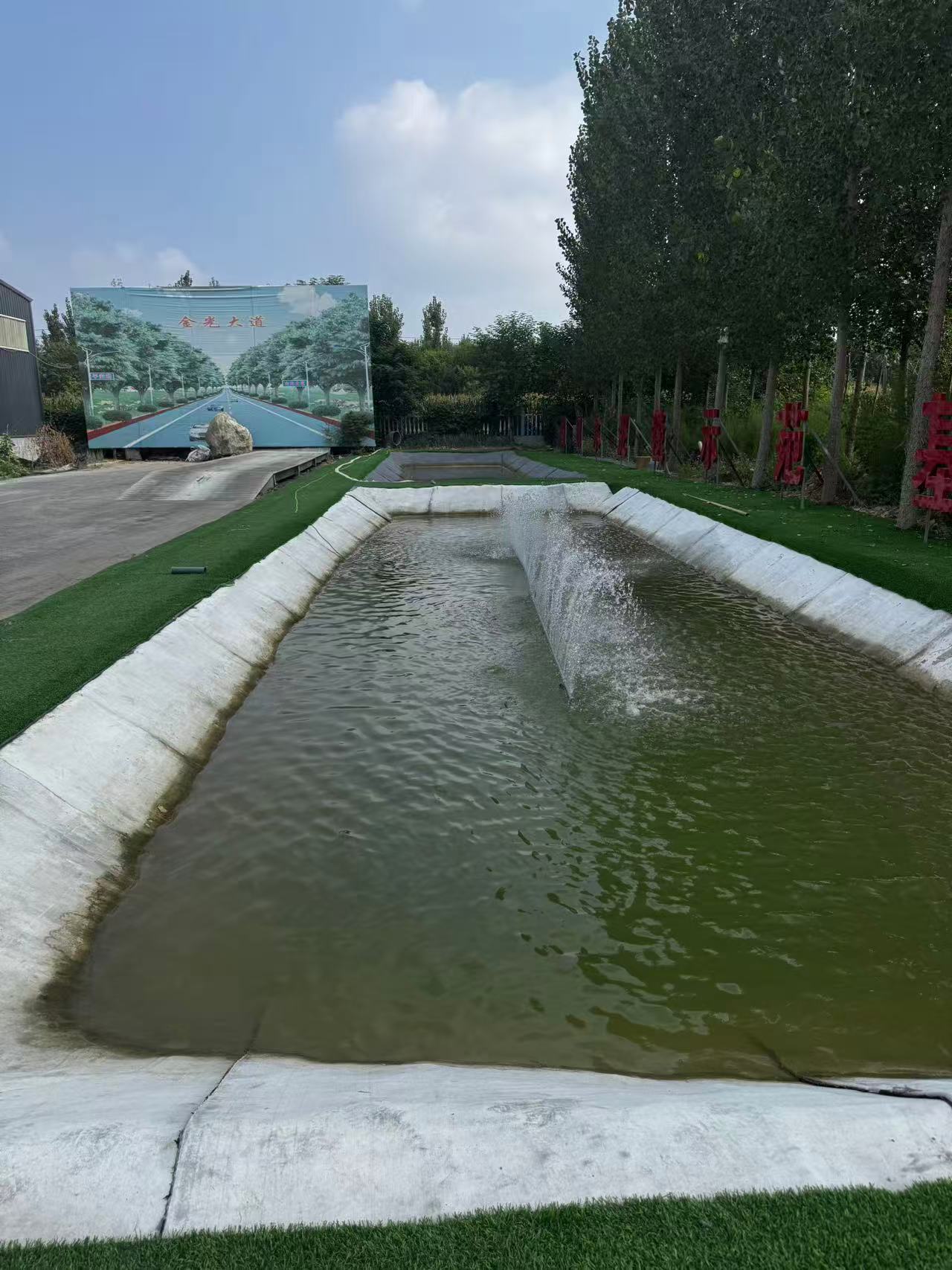
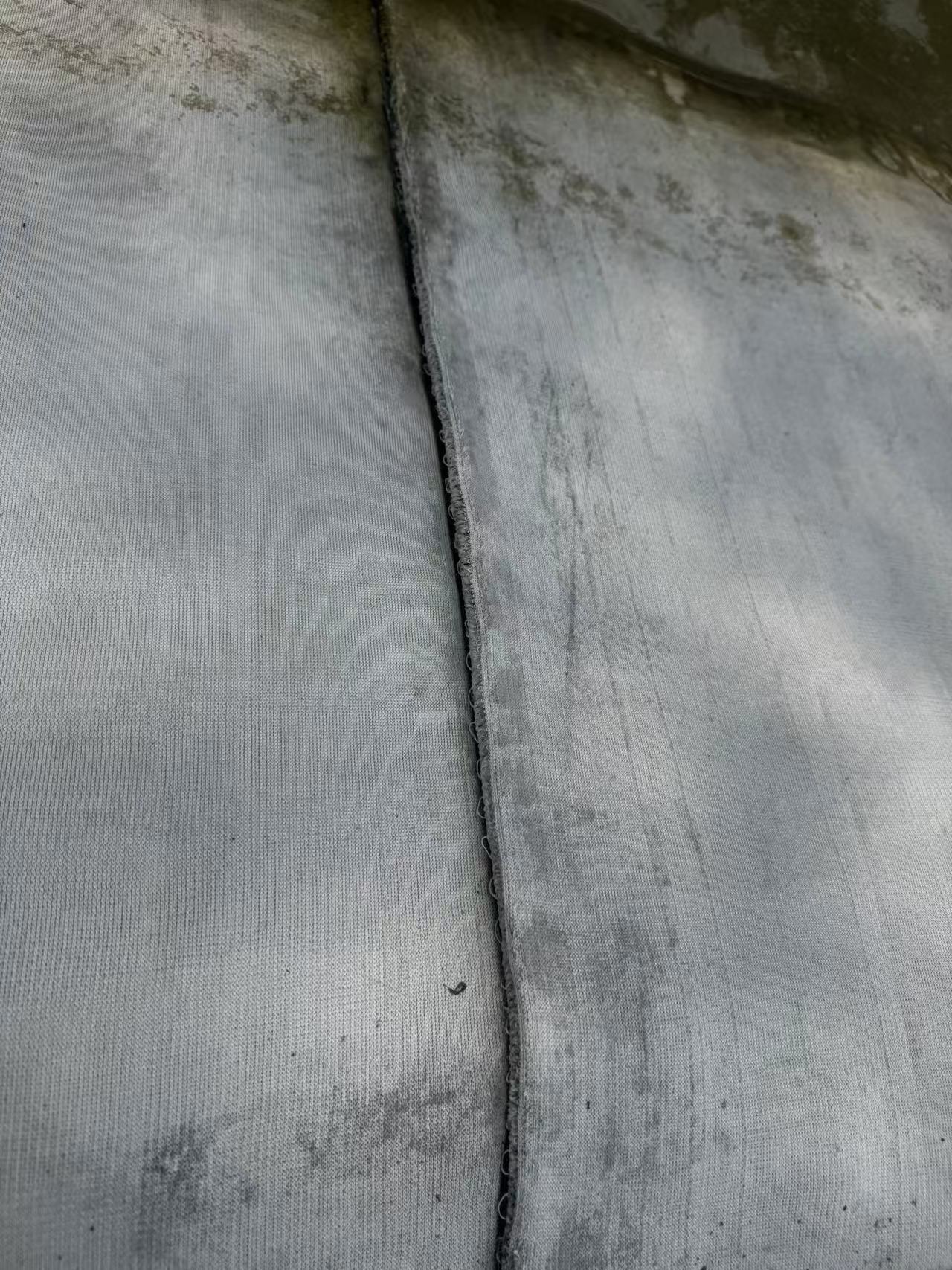
Water-side material and joint views
The supplied images document a water-filled channel or pond-style setting and a visible material-joint detail. They are useful context for finished-roll and installation questions. They are not presented as a named project, a long-term durability result, an installation approval or proof that the photographed material matches the submitted test sample.
Route separation
Keep composite, needle-punched and 3D-textile discussions separate
A composite woven GCCM route and a needle-punched GCCM route have their own equipment pages because their layer and consolidation decisions can differ. A buyer investigating a 3D textile should not assume it is automatically equivalent to either route. The practical next step is a materials review and controlled feasibility discussion, not a generic performance promise.
Once the actual textile, dry-material system and target-market documentation are known, Looking Forward can review a connected equipment concept covering fabric handling, feeding, formation, inspection, winding and factory interfaces. The final technical agreement should identify what has been demonstrated, what remains to be trialed and which acceptance documents govern the project.
Buyer questions
Frequently asked questions
Is a 3D woven GCCM the same as a 3D spacer-fabric GCCM? +
Not automatically. These terms need to be tied to a documented textile construction and sample review. The equipment configuration should follow that evidence, not a broad search term.
Can the supplied test record be used for every cement blanket? +
No. Report 2025W12239FY applies only to its submitted 12 mm sample under the listed methods and conditions. It does not establish results for other products, batches, structures or production configurations.
What should be sent for a feasibility discussion? +
Provide a textile sample, data sheet, layer sequence, intended application, dry-material plan, target roll format, factory layout and any project test or tender requirements.
Does this page claim a fixed production capacity? +
No. Capacity, working width, utility demand and included modules must be reviewed with the selected construction, factory and technical agreement.