
How to Specify a 3D Textile GCCM Production Line: Material Trials, Web Handling and Factory Acceptance
LF Technical Proof
Engineering Evidence at a Glance
Product identity
Structure, configuration and intended use stated
Factory control
Process settings and batch traceability considered
Buyer verification
Ask for method, report, batch and installation plan
China Manufacturer
Qingdao, Shandong
CE / ISO Documentation
Request by configuration
Warranty Scope
Confirmed in quotation
Overseas Installation
Site-readiness planning
Real Factory Evidence
Workshop media available
Prepared with AI-assisted editorial support. The proposed checks require project-specific engineering approval; no individual technical reviewer is represented.
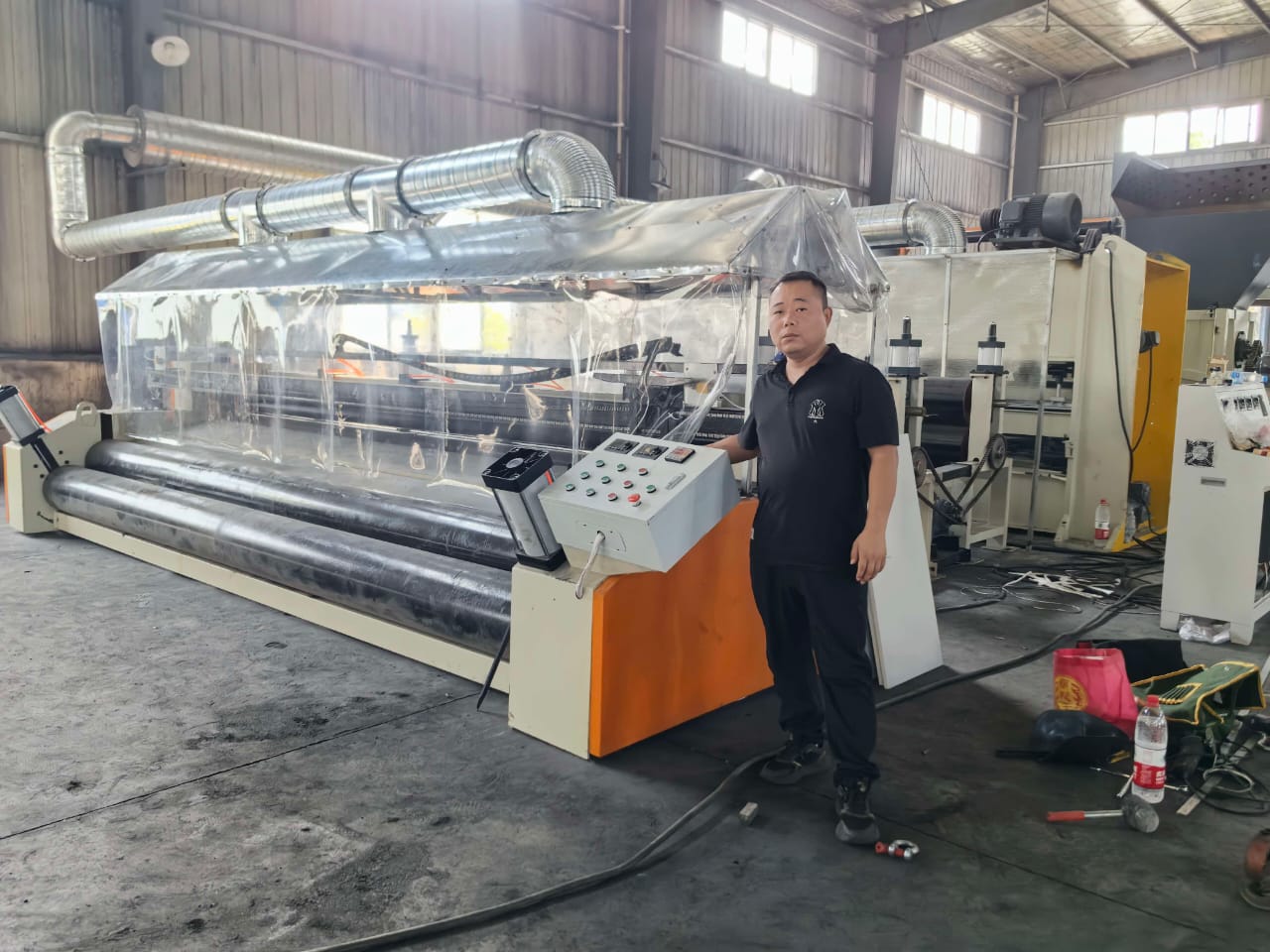
Before ordering a production line for a three-dimensional textile geosynthetic cementitious composite mat (GCCM), a buyer needs a trial plan tied to an identified textile, dry-material system and intended roll format. A useful witness trial establishes how those materials pass through the proposed equipment, what operators must adjust, and which observations become acceptance evidence. A video of moving fabric cannot answer all these questions.
This article proposes a procurement protocol, from incoming textile checks to factory acceptance testing (FAT) and site acceptance testing (SAT). It does not report trials performed by Qingdao Looking Forward New Material Technology Co., Ltd. The aim is to turn a feasibility discussion into a technical agreement that buyer and supplier can witness and review.
1. Identify the actual textile before defining the trial
Give every submitted sample and trial roll a unique identifier. Link it to the textile supplier, batch, construction description, face orientation and any backing or facing layers. Include the supplier's data sheet, intended layer sequence, roll width, core dimensions, winding direction and available sample length. Photograph the faces and a representative cut section alongside the identification label.
Keep spacer-knitted, woven spacer and needle-punched constructions separate. Published research has studied a cementitious construction using warp-knitted spacer fabric and dry-powder cement; that establishes a studied route, not a recipe or equipment validation for another textile.2 A warp-knitted sample should therefore not be relabelled as “3D woven” merely because both descriptions suggest depth.
For procurement, obtain a construction description rather than inferring architecture from appearance. Where the supplier's terminology is unclear, record that uncertainty and request supporting documentation. Do not substitute a needle-punched roll for the proposed spacer textile without explicitly changing the trial scope.
The 3D textile GCCM equipment overview can frame the initial discussion. The witness plan should then identify the exact sample against which the proposed handling arrangement will be assessed.
2. Establish an incoming thickness and recovery baseline
A compressible textile needs a measurement protocol that both parties can reproduce. Before running the line, agree sample conditioning, measurement locations, instrument identification, contact-foot area, applied pressure or load, and the time between contact and reading. Record thickness in millimetres and state the pressure in kPa, or report the load and contact area together. Unspecified hand pressure is not a usable baseline.
Take readings at agreed positions across the width and along the roll. Keep individual readings rather than only an average: an uneven incoming roll can otherwise be mistaken for a machine-induced variation. Note creases, edge damage, telescoping and storage history where known.
For a proposed recovery check, measure the initial thickness under the agreed reading conditions, apply a defined compression for an agreed duration, release it, and remeasure after a specified recovery interval. Record the loading arrangement and timing with the results. This can be a comparative trial observation; it should not be described as an approved standard test unless a relevant method has actually been selected and followed.
Reserve reference pieces from the incoming roll. Later comparisons should use the same protocol, allowing buyer and supplier to distinguish pre-existing variation from changes observed after web handling.
3. Run a textile-only trial before introducing dry materials
Define a textile-only trial in the agreement as the actual textile travelling through the agreed path without cementitious loading. It is separate from initial machine checks with no web installed. Complete the applicable guarding, control and safety checks before threading or movement, using the manufacturer's safe operating procedure.
During the textile-only run, observe unwinding, tracking, edge position, tension response, roller contact and rewinding. Mark the roll's face orientation and document the threading path. Record settings alongside visible behaviour: folds, skew, local flattening, edge curl or contact marks. Where a tension or tracking value is measured, identify the instrument and location; a control-screen setting is not automatically a measured web condition.
Start with the agreed conservative setup and make controlled changes one at a time. Compare retained textile pieces with the incoming baseline. If the web is already damaged before material introduction, loading it with powder will make diagnosis harder.
End this stage with a written decision: proceed, adjust and repeat, or pause pending a textile or equipment change.
4. Introduce the specified dry materials in a connected trial
A material-connected trial should use identified dry inputs, not an unspecified demonstration powder. Record the material supplier, batch references, declared composition information, storage condition and preparation steps. List any substitutions before the witness run so the buyer can decide whether its evidence remains relevant.
Confirm which modules are connected and which are simulated or excluded. The trial record should distinguish the material-delivery system, textile interface, formation section and winding arrangement actually used. A demonstration on one isolated module does not establish behaviour through the complete proposed path.
Observe material introduction, retention, visible spillage, edge behaviour and the stability of the assembled web. Where appropriate, compare samples from agreed width and length positions. Record the chosen loading measurement method and units; do not infer loading uniformity from surface appearance alone. The GCCM manufacturing-process guide is useful for locating these checkpoints within the proposed sequence.
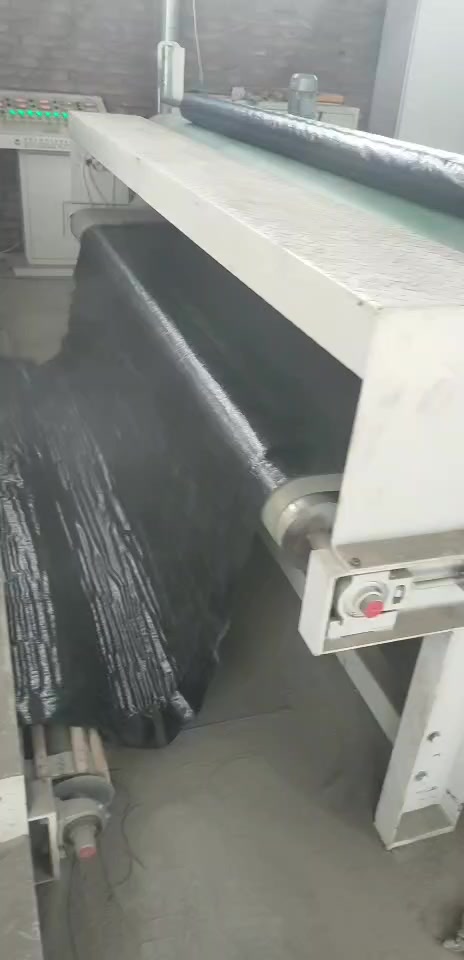
If an adjustment improves one observation but worsens another, preserve both results. The objective is a workable configuration with documented trade-offs, rather than a single attractive sample selected after repeated undocumented changes.
5. Agree an operating envelope and transition checks
Define the proposed operating envelope before the witness trial: the textile and roll formats, material condition, settings to be explored and duration of each observation period. Label trial settings as proposed or demonstrated under stated conditions, rather than converting them into general production guarantees.
Steady movement is only part of the assessment. Agree checks for starting, stopping, restarting and roll changes, including how feeding is coordinated with web motion. For a planned stop, record its duration and what happens to material delivery, web support and restart scrap. An emergency-stop functional check requires its own safe procedure; it should not be improvised as a routine production transition.
For roll changes, state whether the trial covers a stopped change, an agreed splice arrangement or another proposed method. Record who performs it, the steps taken, the resulting web condition and any material that must be segregated. Do not assume uninterrupted operation unless that function is included and demonstrated.
For each transition, agree what constitutes an acceptable observation and what triggers adjustment or a repeat run. If no numerical criterion is justified yet, an explicitly agreed observation can still be useful. Separate those provisional findings from contractual acceptance limits requiring measurement. Log the stable segment after restart as well as the transition itself.
6. Design safe sampling and preserve raw trial records
Choose sampling locations and procedures before the line runs. Operators must not reach into moving nips, bypass guards or cut a moving web to obtain a witness sample. Use a designed safe access point or stop and isolate the equipment as required by its procedure. Consider powder exposure and handling requirements in the sampling plan.
Each sample label should link to the run identifier, textile roll, dry-material batches, time or length position, width position and relevant settings. Record whether it came from stable running, startup, restart or a roll-change segment. Mark orientation and retain paired pieces where the buyer and supplier need separate evaluation.
Preserve the raw record: time-stamped observations, available control trends, instrument readings, adjustment history, photographs and reasons for rejected samples. Include unsuccessful runs and operator interventions. A polished summary alone cannot explain why the final setting was chosen.
Agree who keeps the originals, how files are named, and how buyer and supplier receive matching copies. Record departures from the plan while they happen. These details make a later investigation possible without relying on memory or a short edited video.
7. Separate equipment acceptance from finished-product evaluation
ASTM D8364/D8364M-21(2026) is a specification addressing GCCM material properties for different applications; its public scope does not certify manufacturing equipment.1 Keep that distinction visible in the acceptance documents. Neither a machine demonstration nor a submitted material specimen, by itself, settles both equipment acceptance and finished-product suitability.
FAT should address the agreed equipment scope at the supplier's factory. The schedule can cover installed modules, controls, safety functions, agreed material runs, documentation, training and outstanding items. Identify the evidence required for each check and the person authorised to witness or sign it. Distinguish completed checks from those deferred because the buyer's materials or site interfaces are unavailable.
SAT should address the agreed checks after installation at the buyer's site, with the actual utilities, layout and connected services. Specify which FAT observations must be repeated and which site-dependent checks are additional. The production-line configuration guide can help organise those interface questions.
Finished-product evaluation needs a separate plan identifying specimens, preparation, conditioning or hydration where applicable, selected methods and applicable criteria. Trace every specimen back to its trial segment. Do not treat a favourable result from one specimen as evidence for every operating condition. Allocate responsibility for arranging tests, interpreting results and resolving discrepancies before signing the acceptance schedule.
8. Turn the trial plan into the supplier's technical agreement
When comparing a Chinese manufacturer proposal, ask for more than an equipment list. It should show the identified material route, proposed web path, module interfaces, adjustment provisions, measurement points and sampling arrangements. The quotation and technical agreement should use the same configuration revision so that exclusions are visible before purchase.
A concise acceptance attachment can organise the procurement decision:
- Identify the textile, dry inputs and roll formats governing the trial.
- State the textile-only and material-connected sequences, witness points and records.
- Define agreed operating and transition checks, criteria and repeat-test rules.
- Separate FAT, SAT and finished-product responsibilities, including deferred items.
- List deliverables, open issues and the sign-off process.
Assign ownership and a resolution date to each open issue. Material changes after the trial should trigger review of the affected evidence, rather than silently carrying the original acceptance conclusions forward. Keep observations, unresolved questions and contractual commitments clearly distinguished.
For a project discussion with Qingdao Looking Forward New Material Technology Co., Ltd., send a physical textile sample, dry-material inputs and their specifications, the proposed roll specification, and a factory brief covering layout, utilities and intended operation. Contact Peter at peter@qdlookingforward.com to discuss the material review and proposed trial scope. A documented starting package makes the subsequent equipment proposal and witness plan more useful to both parties.
For a closer look at loading measurements and sampling, read our 3D textile GCCM cement-filling quality-control guide.