
Cement Filling Uniformity in 3D Textile GCCM: Feeding, Sampling and Process Control
LF Technical Proof
Engineering Evidence at a Glance
Product identity
Structure, configuration and intended use stated
Factory control
Process settings and batch traceability considered
Buyer verification
Ask for method, report, batch and installation plan
China Manufacturer
Qingdao, Shandong
CE / ISO Documentation
Request by configuration
Warranty Scope
Confirmed in quotation
Overseas Installation
Site-readiness planning
Real Factory Evidence
Workshop media available
Prepared with AI-assisted editorial support. The proposed checks require project-specific engineering approval; no individual technical reviewer is represented.
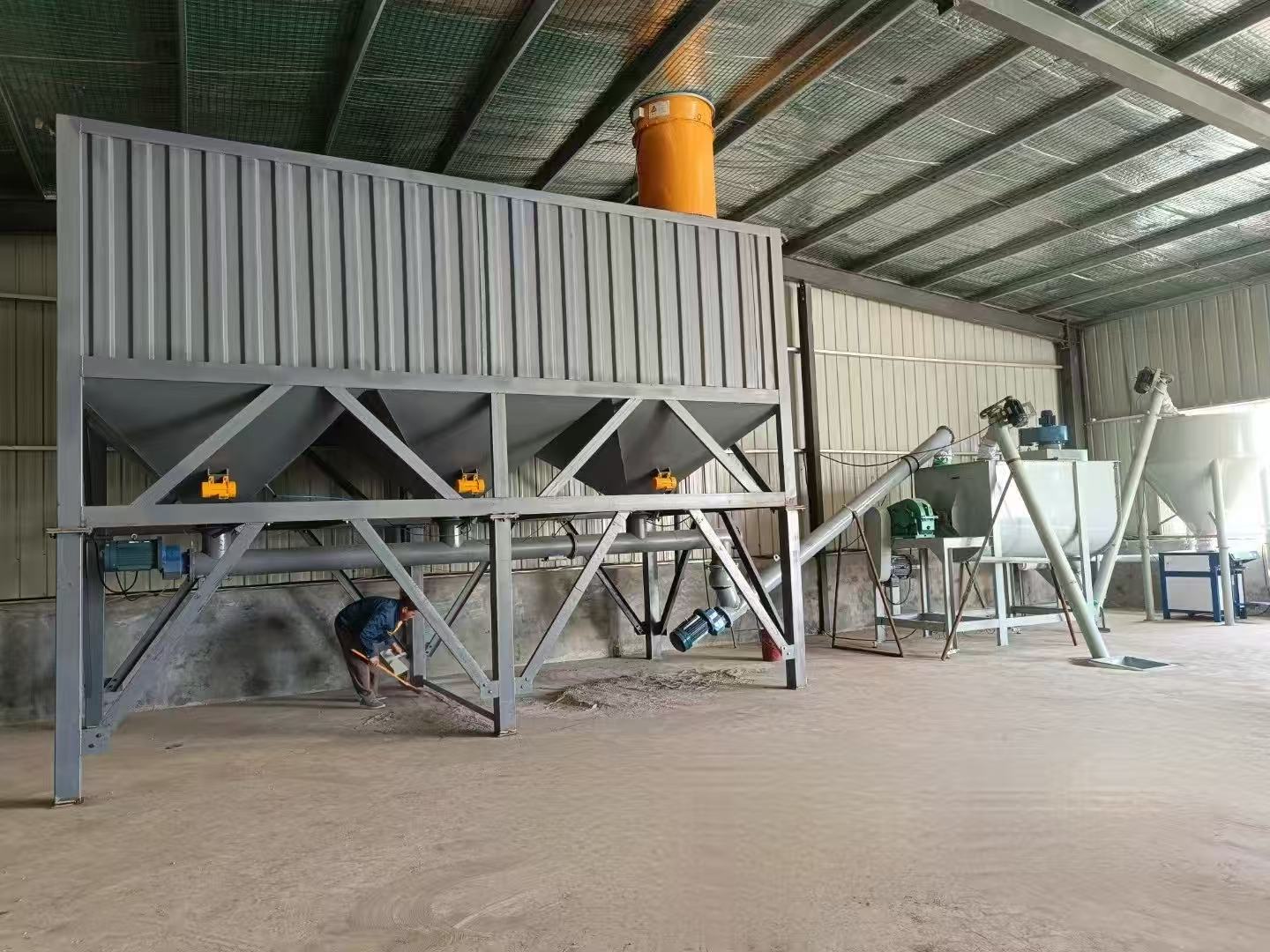
A stable feeder display does not establish that dry cementitious mix is evenly retained inside a three-dimensional textile. Material can leave the feeder without reaching the intended area, and an acceptable average loading can conceal an uneven profile. For a geosynthetic cementitious composite mat, or GCCM, diagnosis therefore needs to connect feeder delivery with the dry product actually collected.
The practical question is not simply whether enough powder was supplied. It is where that powder remained, how consistently it remained there, and whether the sampling method preserved the evidence.
Three different meanings of filling uniformity
Mass per unit area describes the quantity associated with a defined product area. It is useful for checking loading, but total composite mass includes the base textile, backing and any other layers. A cementitious loading estimate must distinguish those contributions from retained mix.
Cross-width distribution asks whether comparable positions across the working width have comparable loading. A heavy centre and lightly filled edges can produce an apparently satisfactory whole-width average. Separate, position-labelled specimens preserve that distinction; combining them into one pooled measurement removes it.
Through-thickness distribution asks where material sits between the textile faces and within the spacer structure. Similar specimen masses do not show that powder has occupied comparable internal regions. Surface accumulation and incomplete penetration can remain hidden in the same mass result.
These are complementary measurements, not interchangeable definitions of quality. A project plan should identify which observation supports each decision. Calling a specimen “uniform” solely because its weight matches a target leaves the spatial questions unanswered.
Connect feeder delivery to retained loading
For a stable production interval, the symbolic mass relationship is:
q_retained = C × w × v
Here, C is the average retained dry cementitious mix loading in kg/m², w is the corresponding sampled product width in m, and v is actual product travel speed in m/min. Multiplying the units gives kg/min, the unit of q_retained. The relationship concerns retained mix, not total composite mass or a feeder setpoint.
To work through it without assumed numbers, obtain C from representative product specimens after accounting for non-mix layers. Match w to that product area and v to the same running interval. The resulting retained rate can then be compared with independently measured delivery over the corresponding interval, allowing for transport delay.
A difference does not automatically mean a dosing fault. Material may remain in transfer equipment, enter dust collection, fall outside the product or leave with edge trim. During a transient, changing material inventory also matters. Document these destinations before attributing the difference to one component.
The cement blanket feeding system is therefore one part of the diagnostic chain. Its readings require comparison with output measurements; they cannot establish retention or spatial distribution alone.
Treat dry-material behaviour as a hypothesis
Dry handling should protect the agreed material condition from moisture exposure and contamination. Record material lot identity, storage history, transfer sequence and refill events. If the incoming mix changes, adjusting the machine before checking the material can obscure the original cause.
Segregation, clumping and discharge pulses are useful troubleshooting hypotheses. Constituents may redistribute during handling; moisture exposure may contribute to agglomeration; intermittent discharge may produce longitudinal bands. These are possible mechanisms to investigate, not documented faults in the company's equipment or formula.
Compare observations from safely obtained incoming-material and discharge samples using a project-agreed method. Note visible agglomerates and any sampling limitation. A surface scoop from a storage container may not represent its full contents, and a clean-looking sample does not establish consistent composition.
Do not introduce water or improvised drying treatments to make a difficult mix flow during a diagnostic trial. Any conditioning change needs material-specific approval and a recorded rationale. Otherwise, the investigation changes both the material and the process at once.
Check the textile before blaming the feeder
The actual textile sample matters more than a broad “3D fabric” label. Document its construction, face orientation, unfilled mass and thickness measurement condition. Use “spacer fabric” where appropriate, but do not describe a supplied textile as woven unless its construction is documented.
Variation in face openings or internal geometry could influence powder entry and retention. Textile tension and compression may also change the space available during filling. These possibilities need comparison with the actual material and process, rather than assumptions drawn from a photograph.
Thickness measured under load is not necessarily the recovered thickness after unloading. Record the measurement pressure or fixture, handling sequence and recovery interval agreed for the investigation. Comparing unlike conditions can make normal compression behaviour appear to be inconsistent filling.
The 3D textile GCCM equipment review should therefore start with the intended textile and layer sequence. A setting developed for one sample is not evidence that another textile will retain mix in the same way.
Sample normal running and transitions separately
A proposed project sampling plan should define locations, specimen areas, collection intervals and repeat measurements before the trial. These choices are project-specific diagnostic proposals, not ASTM-required sampling frequencies or already validated tests.
Safety comes first: use approved collection points and site procedures. Do not reach into moving textile, conveyors or hopper outlets. Sampling that requires access to hazardous equipment must follow the site's isolation procedure, with trained personnel and appropriate dust controls.
A compact sequence keeps the evidence usable:
- Label product specimens by cross-width position and production time or roll location.
- Collect normal-running specimens separately from start-up, shutdown and restart material.
- Weigh matched unfilled textile and backing references, and retain identified comparison specimens.
- Record collection losses and preserve samples for agreed internal-distribution assessment.
Keep individual cross-width results visible before calculating an overall average. Record edge exclusions and trimming consistently. Stable-running evidence should not absorb restart material into one favourable result; transitions deserve their own observations and disposition decision.
Tare references must represent the actual textile and backing lots. Adhesives or other layers require separate accounting where present. Moisture differences between references and filled specimens can bias a mass-derived loading estimate. Cutting and handling can release loose mix, while dust on a specimen can inflate its apparent retained mass.
For through-thickness assessment, agree a sectioning or other inspection method suitable for the actual construction. Record how the specimen is supported and whether preparation moves powder between regions. A disturbed cut face is not reliable evidence of the original distribution. Treat mass-derived loading as a proxy with documented limitations, not a direct measurement of every constituent or internal location.
Even when mass agrees, it may not reveal segregation within the dry mix. A specimen can contain the expected total powder yet differ in constituent proportions. If composition is suspected, preserve separately identified material samples and agree an appropriate material-analysis method with the responsible specialist. Do not infer binder content from gross mass alone. This distinction helps prevent a successful weight check from closing an investigation that is actually about mix identity or composition.
Troubleshoot the pattern, one variable at a time
First describe the observed pattern: persistent edge differences, repeating longitudinal bands, isolated heavy areas or similar masses with different internal appearance. Link that description to time-stamped process records before changing settings.
A persistent cross-width difference suggests checking lateral distribution and textile positioning. A time-linked fluctuation suggests examining delivery behaviour, replenishment events or product travel. Different internal distributions at similar mass suggest examining entry, textile deformation and retention. Each connection is a hypothesis to test, not a diagnosis already established.
Change one agreed variable while holding the others as stable as practicable. Collect comparable before-and-after evidence and allow for material already travelling through the system. If several variables must change for safety or operating reasons, document them and avoid claiming that one change caused the improvement.
An apparent improvement should be repeatable under the same defined conditions. If uncertainty in weighing, tare or collection is large enough to explain the difference, resolve the measurement issue before treating the adjustment as successful process control.
Separate dry-product evidence from hydrated performance
Dry-product checks address retained quantity and distribution. Finished-performance testing addresses what the composite does after hydration and preparation under defined conditions. Neither evidence set replaces the other: a consistent dry mass does not establish mechanical performance, while a strong tested specimen does not prove consistent production.
Ma, Mei and Ma studied concrete canvas reinforced with warp-knitted spacer fabric and found that water dosage affected the tested material's mechanical performance and hydration behaviour.1 The relevant lesson here is to control hydration variables when comparing filled specimens. The study does not supply a universal recipe for another textile or demonstrate ASTM equivalence.
For comparative testing, agree and record water application, curing conditions, specimen preparation and test timing. Otherwise, a hydration difference can be mistaken for a filling difference.
The company's submitted-sample test record identifies a nominal 12 mm cement blanket under report 2025W12239FY.3 It supports that submitted sample under its reported conditions, not future batch uniformity, dosing accuracy, a particular 3D architecture or ASTM conformity.
Make batch records usable for procurement decisions
Useful batch records connect the mix and textile lots to the product roll, recorded settings, operator interventions and sample locations. Include stop/restart events, refill times, weighing equipment identification, tare references, losses and deviations. Preserve the individual results alongside any summary so a buyer can distinguish average loading from distribution.
Procurement acceptance criteria should specify the measurement basis, sampled regions, treatment of transitions and handling of uncertain results. Agree permissible variation and disposition rules before reviewing production results, rather than selecting favourable limits afterwards. Dry-loading criteria and hydrated-performance criteria need separate evidence and an explicit relationship to the intended application.
ASTM D8364/D8364M-21(2026) is a specification for GCCM materials and their application-dependent properties.2 It is not manufacturing-machine certification. Its public scope does not establish filling tolerances or trial sampling frequencies for this proposed process plan.
For a China GCCM equipment procurement discussion, send Qingdao Looking Forward New Material Technology Co., Ltd. the actual textile sample, dry-mix brief, target basis weight and proposed sampling brief. Clarify whether that target means retained cementitious loading or total composite mass. Use the contact page or peter@qdlookingforward.com to request a project-specific technical review before acceptance criteria are finalized.
To connect these checks with a purchase agreement, read our 3D textile GCCM line-trial and factory-acceptance guide.